WORLD RANKING
ITF Masters Men’s 35+ singles
Aaron ranked among the top 15 worldwide when the official ranking was checked August 19, 2026. Rankings change, so the source link opens the current ITF list.
A high-level competitor and thoughtful teacher who helps kids ages 8+, juniors, and adults understand their game, build repeatable skills, and compete with greater confidence.
Plan a lesson with Aaron
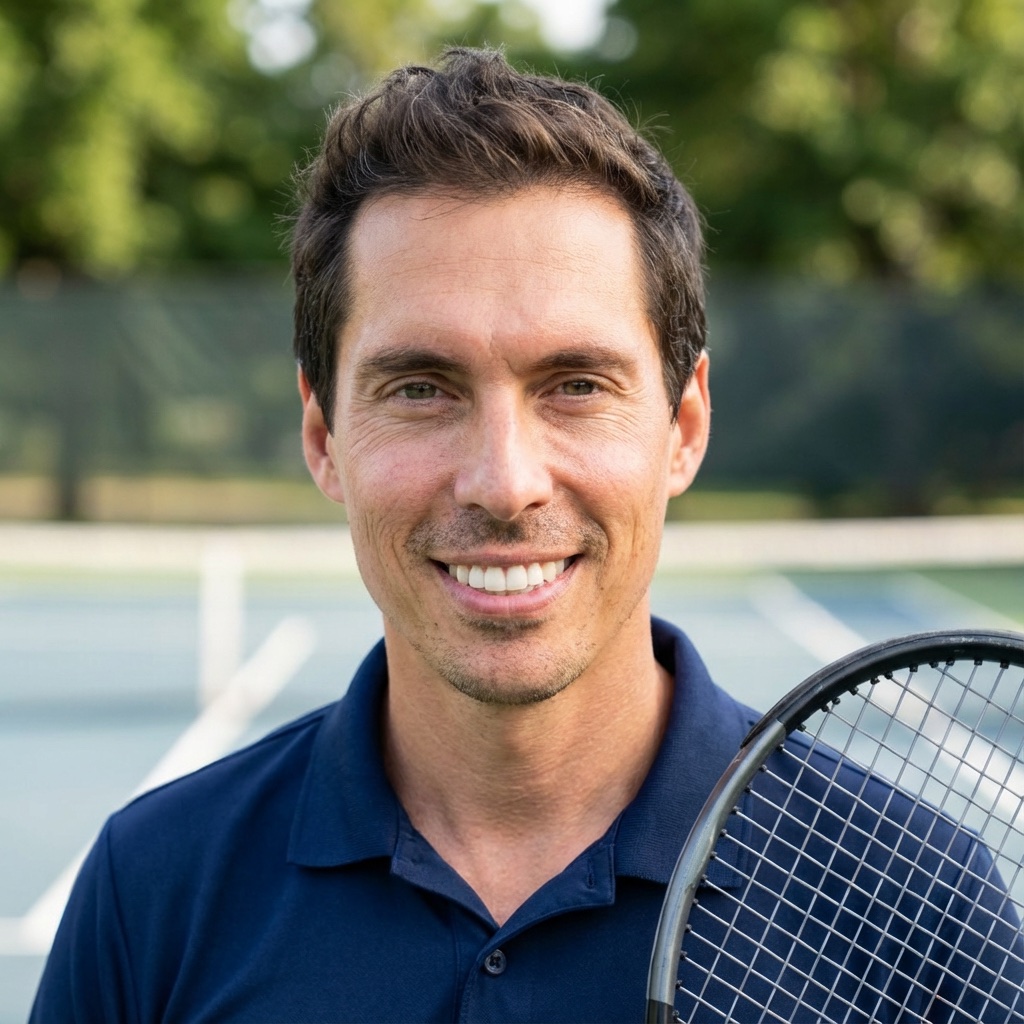
Aaron brings the perspective of someone who has trained, adapted, and competed at demanding levels of the sport—and who knows that a useful lesson must make sense to the individual player.
He competed in NCAA Division I singles and doubles at the University of South Alabama. His later competitive record includes a USTA Southern Player of the Year award, consecutive Atlanta Senior Invitational Men’s 35 singles titles, and selection to represent the United States at the Italia Cup.
Those credentials create useful context, not a one-size-fits-all coaching formula. A child age 8 or older learning a first rally, an adult returning after years away, and a tournament player need different lessons. Aaron’s job is to translate deep tennis knowledge into the right cue, drill, target, and challenge for the player standing across the net.
That is the idea behind Krisan Tennis: serious attention to detail delivered with patience, encouragement, and a practical plan.
Years of match play give Aaron a practical view of movement, timing, recovery, and decision-making—the details he now makes understandable for developing players.


Aaron’s experience spans college tennis, national-level competition, and international team play. It informs how he teaches preparation, problem-solving, and composure.
College · National · InternationalWORLD RANKING
TEAM USA
PLAYER OF THE YEAR
BACK-TO-BACK
COLLEGE TENNIS
Good instruction does not simply identify what is wrong. It gives a player a better option, a way to feel it, and enough relevant practice to make it usable.
Goals, experience, learning style, confidence, movement, and current technique all shape the lesson. The plan changes when the evidence changes.
A player cannot act on six corrections at once. Aaron prioritizes the change with the most value and gives it language the athlete can remember.
A stroke becomes valuable when it helps solve a point. Practice progresses toward movement, targets, patterns, and decisions rather than ending at appearance.
A lesson should create more than a tired player and an empty basket. It should create understanding.
Players should know what they were trying to improve, what a better version feels or looks like, and where that skill fits in a rally or point. Parents can understand a young player’s current priority without needing a technical lecture, while adult players leave with language and practice ideas they can use on their own. Over time, those small pieces become a more complete game.
Aaron’s competitive background brings credibility to the process. His teaching approach makes that experience accessible to a child age 8 or older learning a first rally, an adult building or rebuilding a game, a junior preparing for a school lineup, or a competitor looking for a more reliable pattern.
Train with purpose.