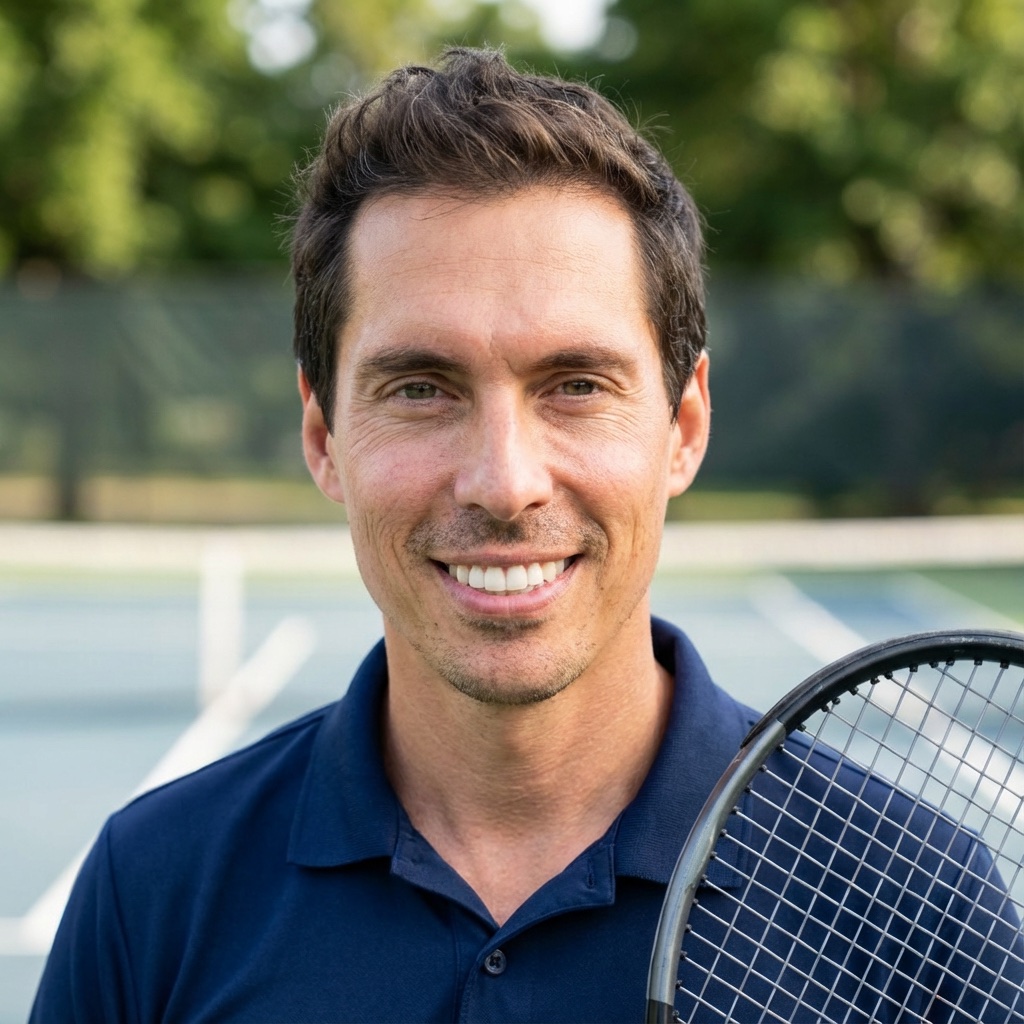
Meet the player
Aaron watches how your child moves, tracks the ball, swings, listens, and responds to feedback. He also asks what feels fun, difficult, or important to them.
A comfortable starting point—not a pass-or-fail evaluation.
Private beginner, youth, and junior tennis lessons for players ages 8 and up near Marietta, East Cobb, Kennesaw, Woodstock, Alpharetta, Roswell, and Buckhead—designed to help young players understand the game, enjoy the work, and see their progress.
Plan a kids lessonThe best beginner tennis lesson is challenging enough to create progress and welcoming enough that a child wants to return. Aaron balances both.
Private coaching gives a young player room to learn at an individual pace. Instead of asking every child to follow the same drill, Aaron can change the ball feed, target, explanation, or movement pattern based on what the player is ready to do. A complete beginner may work on finding a balanced contact point and sending the ball over the net. A developing junior may connect that same stroke to recovery, direction, and point play.
Parents should expect clear goals, age-appropriate language, and practical feedback. A lesson is not a test of whether a child is “naturally good” at tennis. It is a structured place to notice what is happening, try a useful adjustment, and build a skill through repetition.
Your child does not need to arrive with perfect strokes, match experience, or the right tennis vocabulary. Aaron starts with the player in front of him and builds from there.
A typical coaching journeyAaron watches how your child moves, tracks the ball, swings, listens, and responds to feedback. He also asks what feels fun, difficult, or important to them.
Lessons focus on the few changes that matter most: ready position, footwork, contact point, swing shape, recovery, and a reliable way to begin each point.
Technique moves into live-ball rallies, targets, movement patterns, serving, returning, and age-appropriate point play so practice begins to feel like tennis.
Aaron revisits priorities, adds challenge when the player is ready, and explains what improved, what comes next, and what can be practiced between lessons.
Development is not perfectly linear. Some skills click quickly; others need time. The goal is steady understanding, repeatable habits, and a child who stays engaged enough to keep learning.
The labels matter less than the actual player. These stages help parents understand how a lesson can change as skills become more reliable.
Learn a ready position, basic grips, balanced movement, a comfortable contact point, and how to begin a cooperative rally. Short targets and simple games keep the work understandable.
Connect forehands, backhands, serves, and volleys with footwork. The player learns to recover after each shot and use height, direction, and pace with more purpose.
Use serve-plus-one patterns, returns, point construction, scoring, and pressure situations. Technique remains important, but the player also learns when and why to use a shot.
Tennis gives children a mix of movement, coordination, decision-making, and individual responsibility. Starting early can create more time to explore those skills—but the experience should stay age-appropriate, varied, and enjoyable.
Young players benefit from fun, varied movement and manageable challenges. The right first goal is not a ranking; it is learning to enjoy the process of getting better.
Movement
Fitness
Thinking
Mindset
Confidence
Long term
A parent does not need to become the coach. The most useful support is often simple: help the child arrive prepared, ask what they enjoyed or learned, and notice specific effort.
Progress can look like a longer rally, a calmer reset after a miss, earlier preparation, or a serve motion that is easier to repeat. Those changes may arrive before match results. Naming them helps a young player understand that improvement is built from small, controllable actions.
If a child wants extra practice, keep it manageable. A few minutes of shadow swings, ball tracking, or cooperative rallying can reinforce a lesson without turning every trip to the court into a performance review.
Looking ahead to school or tournament tennis?
Explore junior player developmentAaron currently offers private lessons for players ages 8 and up, including complete beginners, developing juniors, teens, and adults.
No. For players ages 8 and up, Aaron works from the player’s current starting point. A first lesson can begin with how to hold the racquet, move to the ball, and create a comfortable rally.
No. Some children want a new activity and others want to prepare for school or tournament tennis. The instruction and pace should match the child’s goals.
One-on-one lessons let Aaron adjust the explanation, ball feed, pace, and challenge immediately. The player receives more relevant repetitions and feedback than in a large group.
Those terms often overlap. Aaron plans the lesson around the player’s age, experience, goals, and readiness rather than a label. Beginners may start with movement and contact, while developing juniors connect technique to rallies, serves, and point play.
Starting early does not require specializing early. Young athletes generally benefit from varied movement, manageable challenges, rest, and an experience that remains enjoyable.
A confident first step.